A reader’s companion
Read with
your eyes open.
Jack London’s The Iron Heel (1908) asks readers to hold a woman’s account of resistance beside a historian’s distant view of it. This guide explains the premise, the principal voices and the edition’s contents, with chapter references to support a closer reading. The main answers avoid detailed plot resolutions.
The story
What is The Iron Heel about?
Jack London’s The Iron Heel (1908) follows Avis Everhard as she becomes involved in a socialist movement confronting an American oligarchy. Her account traces the concentration of economic power, the destruction of political opposition and the movement’s attempts to resist. A fictional editor in the distant future annotates her manuscript.
The novel: Foreword and Chapters I, V, X and XIV.
Link to this answerWho is Avis Everhard?
Avis Everhard is the principal narrator of The Iron Heel. She begins as the daughter of a Berkeley physicist, John Cunningham. Meeting the socialist Ernest Everhard changes her understanding of the society around her. Her manuscript records both her love for Ernest and her involvement in the revolutionary movement.
The novel: Chapters I, III, X and XI.
Link to this answerWhat does “the Iron Heel” mean?
In Jack London’s novel, the Iron Heel names the oligarchy: a ruling order in which concentrated wealth controls government and uses organised force to maintain its position. The image of a heel makes that domination physical. In Chapter V, the industrialist Wickson threatens to crush the revolutionists beneath his class’s power.
The novel: Foreword and Chapter V.
Link to this answerWhen was The Iron Heel published, and when is it set?
The Iron Heel was first published in 1908. Avis’s account looks back on events beginning in 1912, then a near future for London’s readers. The fictional editor Anthony Meredith writes from centuries later. The dates belong to the novel’s invented history; its America is a speculative setting.
The novel: Foreword and Chapter I; original publication date in the edition Introduction.
Link to this answerReading the novel
Who is Anthony Meredith, and why are there notes from the future?
Anthony Meredith is Jack London’s fictional editor of the recovered Everhard manuscript. His Foreword and notes look back on Avis’s world from a later society. They can correct or complicate her account, so readers encounter events through both her immediate experience and his historical distance. Meredith’s voice is part of London’s original novel.
The novel: Foreword and notes; Lee Raymond, “London’s Literary Architecture.”
Link to this answerIs The Iron Heel a dystopian novel?
Yes. The Iron Heel depicts a future social order maintained through class hierarchy, coercion and the suppression of dissent. It is also political fiction: Ernest’s speeches, the businessmen’s dinner and the account of organised labour make economic argument central to the narrative. Readers should expect debate alongside conspiracy and action.
The novel: Chapters II, V, VIII, XIII and XIV.
Link to this answerIs The Iron Heel difficult to read?
The main challenge is its extended political argument. Jack London devotes whole scenes to speeches and disputes about labour, profits and class power. Avis’s personal account and the later episodes of clandestine resistance change the pace. Reading Meredith’s notes alongside the narrative helps explain the novel’s deliberately divided perspective.
The novel: Chapters II, VIII, IX and XVIII; Lee Raymond, “London’s Literary Architecture.”
Link to this answerDid Jack London predict the future in The Iron Heel?
Jack London’s The Iron Heel imagines how concentrated wealth might become an authoritarian political order. Its fictional sequence of events is not a record of what actually happened. Lee Raymond’s Introduction uses the novel to examine mechanisms of power and draws contemporary parallels, while stating that those parallels do not imply exact correspondence.
The novel: Foreword; Lee Raymond, Introduction, opening paragraphs.
Link to this answerWhat should readers know about London’s prejudices and the violence?
The Iron Heel contains graphic political violence and dehumanising descriptions of impoverished people. Lee Raymond’s Introduction explicitly addresses the racial and eugenic assumptions that complicate London’s social criticism. Readers can examine the novel’s argument about domination while also questioning how its narrator, fictional historian and author describe the people being dominated.
The novel: Chapters XXI–XXIV; Lee Raymond, “London’s Literary Architecture.”
Link to this answerThe Time Warp Edition
What is included in the Time Warp Edition of The Iron Heel?
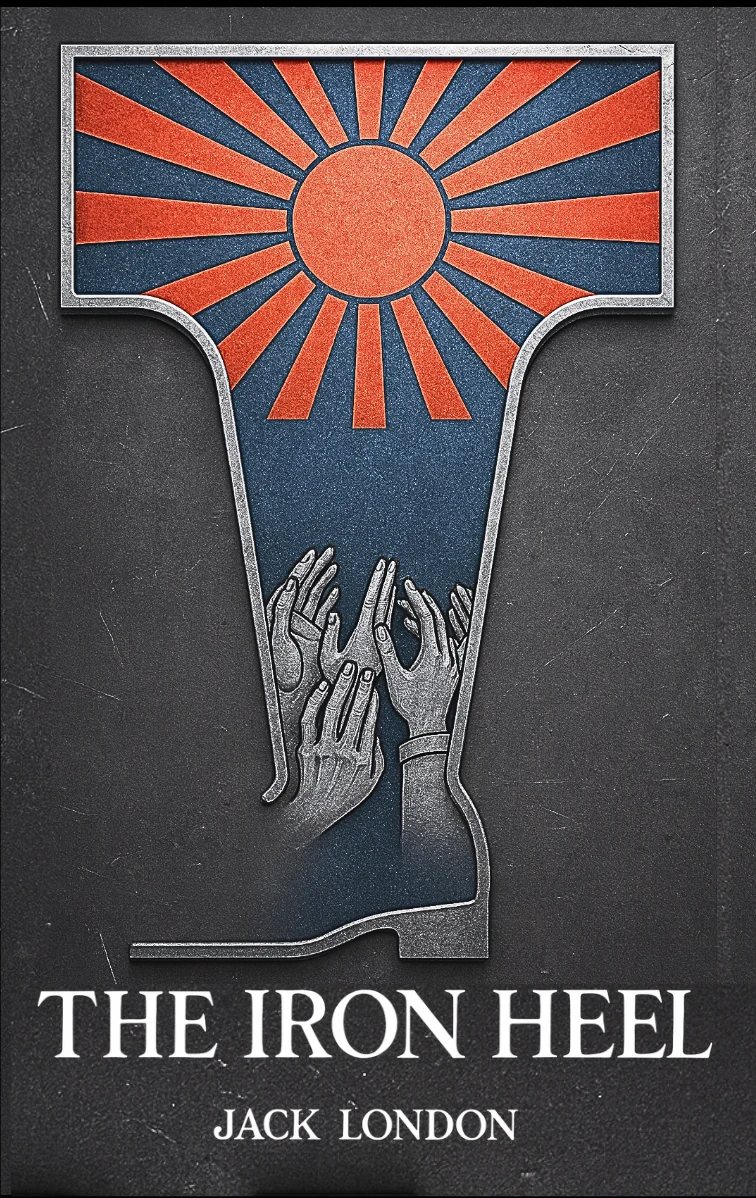
The Time Warp Editions paperback of Jack London’s The Iron Heel includes an Introduction by Lee Raymond, sixteen original illustrations, a story timeline, an extended author biography and discussion questions. The edition is listed at 335 pages. The edition page presents selected artwork and passages from the Introduction.
Time Warp Editions paperback listing, ISBN 9781967573073; checked 27 September 2026.
Link to this answerWhat does Lee Raymond’s Introduction add?
Lee Raymond’s 2025 Introduction examines how London’s oligarchy converts wealth into control of institutions, divides labour and maintains its rule. It also explains the interaction between Avis’s manuscript and Meredith’s future commentary, acknowledges limitations in London’s vision, and draws parallels with contemporary American conditions. Read a substantial selection from the Introduction.
Lee Raymond, Introduction to the Time Warp Edition (2025).
Link to this answerAre the notes by Anthony Meredith new to this edition?
No. Anthony Meredith’s Foreword and fictional notes were written by Jack London as part of The Iron Heel. They are a device within the story. Lee Raymond’s Introduction is separate editorial material created for the Time Warp Edition. Distinguishing those voices helps readers understand both the novel and the edition’s contribution.
The novel: Foreword and notes; Lee Raymond, Introduction (2025).
Link to this answerWhich ISBN identifies this paperback?
The Time Warp Editions paperback featured on this site has ISBN-13 9781967573073 and ISBN-10 1967573077. The Amazon product identifier is also 1967573077. The listing names Jack London as author and Lee Raymond as editor, with a publication date of 1 October 2025.
Time Warp Editions paperback listing; checked 27 September 2026.
Link to this answerWhere can I buy the illustrated Time Warp Edition?
The paperback is available through the Amazon listing for ISBN 9781967573073. Check that the product page names Time Warp Editions and Lee Raymond when choosing the edition. Amazon provides current pricing, stock information and delivery options for your location.
Link to this answerFor a second look
Questions for discussion
Jack London’s The Iron Heel (1908) puts its political arguments under pressure through competing voices and uneven forms of solidarity. These website questions return to specific scenes. They reveal later developments in the novel; use them after reading, or open only the question relevant to your current chapter.
Show discussion prompts (contains later plot developments)
- When does Avis begin to trust Ernest’s account of society? Which encounters change her mind, and how much authority should a reader grant her retrospective account?Chapters I–IV; compare Anthony Meredith’s Foreword.
- At the businessmen’s dinner, what separates the small owners’ complaints about the trusts from Ernest’s criticism of the economic order itself?Chapter VIII, “The Machine Breakers.”
- Wickson and Ernest both speak the language of power. What differences in their positions survive that shared vocabulary?Chapter V, “The Philomaths.”
- What does the suppression of Cunningham’s book reveal about the relationship between publishers, newspapers and public knowledge?Chapter X, “The Vortex.”
- Why do some workers become invested in the new order? Read the account of the favoured labour castes beside the oligarchs’ belief in their own righteousness.Chapters XIV and XXI; “Forging the Iron Heel” in Lee Raymond’s Introduction.
- Where does the language used for the “people of the abyss” undermine the novel’s claim to solidarity? How does the future commentator’s distance affect your judgment?Chapters XXI–XXIV; “London’s Literary Architecture” in Lee Raymond’s Introduction.
Discussion prompts on this website were developed from the cited passages. They are separate from the questions included in the paperback.
Sources & credits
Jack London’s novel
The Iron Heel (1908). Quotations on this website have been checked against the original text in the publisher’s source files. Chapter references identify the passages independently of pagination. A public reference text is available at Project Gutenberg.
The Introduction
Lee Raymond, Introduction to the Time Warp Edition of The Iron Heel (2025). Excerpts are reproduced from the Introduction; the longer selection is checked against its print pages. Raymond’s interpretation is attributed separately from London’s fictional voices.
Edition details and images
Time Warp Editions, paperback ISBN 9781967573073, published 1 October 2025. Format, page count and included components are described in the publisher’s Amazon listing, checked 27 September 2026.
Cover, selected artwork, Introduction page images and physical-book photograph supplied by Time Warp Editions. This website presents the publisher’s own edition. Introduction © 2025 Lee Raymond; cover and artwork supplied by Time Warp Editions.
Guide prepared 27 September 2026. References to the novel’s political events describe its fictional history.
Time Warp Editions · Illustrated paperback
The
Iron Heel
Introduction by Lee Raymond
16 original illustrations · 335 pages
ISBN 9781967573073
Paperback details and current availability on Amazon.